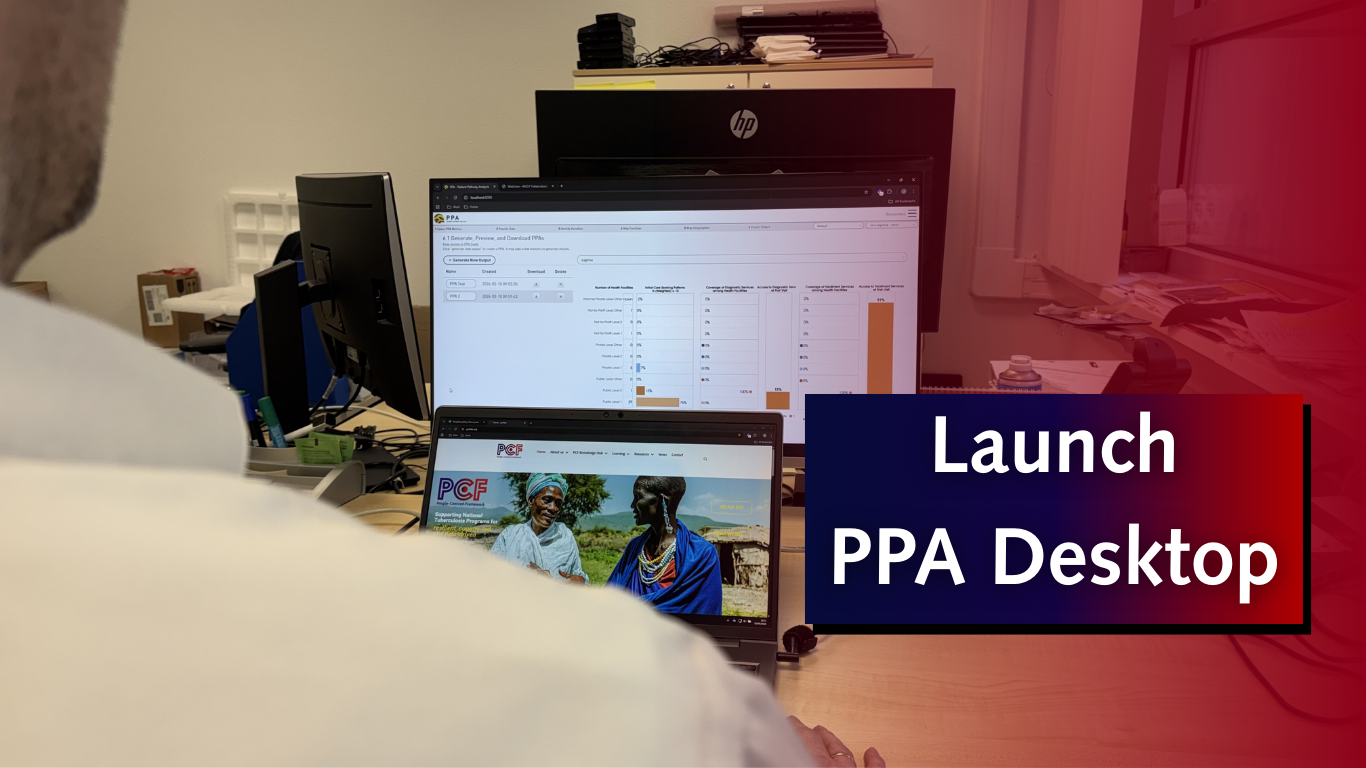
Launch of PPA Desktop
The launch of the PPA Desktop is marking a milestone for the Patient Pathway Analysis tool, responding directly to long‑standing challenges faced by tuberculosis (TB) programmes. The online PPA Wizard has proven valuable. However, it also depended on continuous internet connectivity and incurred recurring monthly hosting costs. For many countries, this limited sustainability and access, prompting a shift towards a more resilient, locally controlled solution.
What’s new with PPA
The PPA Desktop is bringing the full functionality of the PPA to a Windows-based desktop application. This allows users to run analyses entirely on their own computers. By moving away from centralized online hosting, the new setup is free of hosting costs. Additionally, and just as importantly, all data are stored locally, which enables use in offline or low-connectivity settings, an essential feature for many TB programmes operating in challenging environments.
Behind the scenes, the shift to desktop did not mean starting from scratch. Instead, the existing PPA infrastructure has been repackaged using Docker and Windows Subsystem for Linux 2 (WSL2). This approach containerises the database, R server, and application server into a lightweight Windows installer, with much of the technical setup automated for the user. The application supports more data formats then before, including Excel, CSV, and all Stata versions, and introduces a dedicated .ppaw file format to simplify sharing through import and export.
The current release already includes several improvements aimed at everyday use. Enhanced error and warning handling, user‑interface and quality‑of‑life updates, and built‑in version control make the tool easier to maintain and update over time. The PPA Desktop has been tested on older hardware for compatibility, with clear minimum requirements documented, and the full solution is released as open source on GitHub to support transparency, collaboration, and long‑term sustainability.
Looking ahead
The PPA Desktop opens new possibilities for wider adoption of PPA across countries and partners. By lowering maintenance costs, enabling offline use, and keeping data under local control, the tool strengthens country ownership of programme analysis. Future releases will continue to refine usability and address optional improvements identified with partners. Together, these steps signal a new chapter for PPA, one focused on accessibility, sustainability, and practical impact for TB programmes worldwide.

